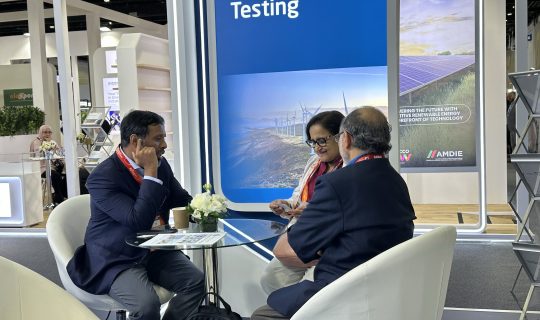

At the Industry Navigator Conference 2026 in Vienna, Paolo Miolo, Sales and Marketing Director at KEMA Labs, delivered a presentation exploring how testing can support a more resilient and reliable transformer market in a period of unprecedented growth and pressure on global energy infrastructures.
As the energy transition accelerates, transformers are evolving from standard grid components into strategic assets essential for enabling renewable integration, grid expansion, offshore wind developments, data centres and growing electrification needs. According to the market data presented during the conference, global demand for transformers is expected to rise significantly by 2030, while manufacturers continue to face supply chain constraints, material shortages and extended lead times.
Against this backdrop, ensuring product quality and reliability is becoming increasingly important. As demand for power transformers continues to grow, increasing pressure on manufacturing capacity and delivery schedules highlights the importance of rigorous testing and quality assurance throughout the value chain to support long-term reliability. The presentation highlighted how rigorous testing and early qualification processes can help manufacturers, utilities and project developers reduce uncertainty, improve performance and avoid costly delays.
Industry data shared by KEMA Labs also showed a strong increase in testing demand, reflecting the sector’s growing focus on validation and compliance. At the same time, laboratory experience demonstrates the value of independent testing in supporting manufacturers throughout the certification process, providing opportunities to validate product performance, identify potential areas for refinement and address technical risks before deployment.
The key takeaway from the session was clear: in an increasingly constrained and competitive market, reliability can no longer be considered a final checkpoint. It must become an integral part of product development and market strategy from the earliest stages. Planning testing activities early, standardizing requirements and validating designs before market entry are essential actions to support the reliable and sustainable growth of future power systems.